
Were you looking forinformation about the beautiful ponds and enchanting fountains of the Palace of Versailles? You are in the right place! In this article I will tell you about these extraordinary elements, true masterpieces of hydraulic engineering and art, which make a visit to Versailles an unforgettable experience.
We will explore together the most famous ponds and fountains, such as the Fountain of Latona, the Fountain of Apollo, and the spectacular Fountain of Neptune, revealing their secrets and history.
Not only will you discover how to see these hidden gems in the gardens of Versailles, but I will also answer frequently asked questions to help you better plan your visit.
Ready to immerse yourself in the timeless magic of the ponds and fountains of Versailles? Let’s go!
ALT! Are you ready to explore the wonders of the Palace of Versailles without having to wait in line under the sun? Buy your tickets now directly on our website and secure priority access to this stunning heritage site! Save precious time and enjoy an unforgettable visit to Versailles. Don’t miss your chance, book now!
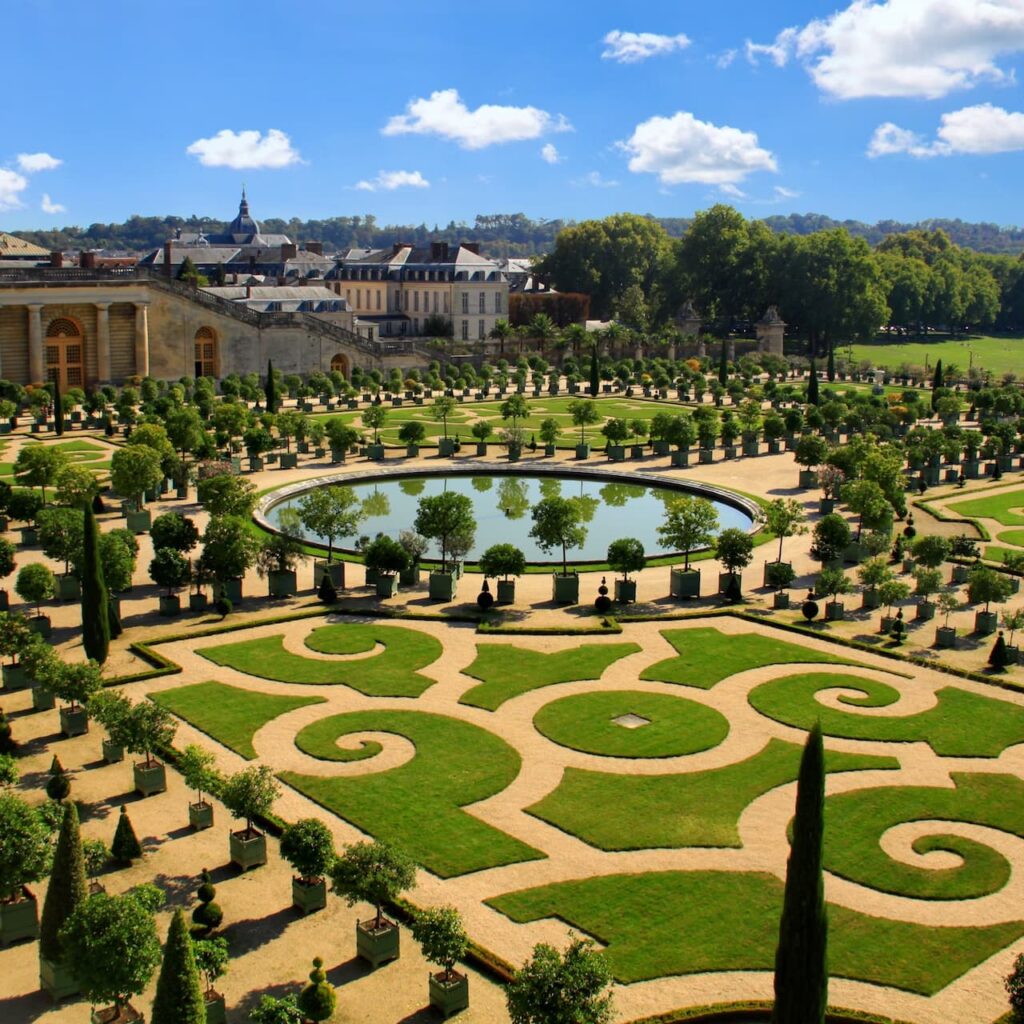
Palace of Versailles: Entrance ticket + Gardens and Trianon Estate
Buy online. Choose your preferred time. Visit the Palace of Versailles and the halls of the Palace, access the Gardens and Trianon Estate
You can cancel for free up to the day before your visit.
Table of Contents
Ponds and fountains in Versailles: full description
The four ponds of the seasons

ID 133085663 @ Galvani Raffaella | Dreamstime.com
At the heart of the sumptuous gardens of Versailles, the harmony between nature and art finds its most sublime expression in the majestic Basins of the Seasons. Created in the 1670s, these four architectural jewels were designed to celebrate the eternal cycle of nature.
Strategically located at the intersections of the garden’s main avenues, the basins are a tangible manifestation of the creative genius of the landscape designers of the time.
To the north, the Basin of Flora, with its majestic fountain dating from 1674, and the Basin of Ceres, surrounded by elegant sculptures evoking the summer spirit, dating from 1673, capture the vibrant essence of spring and summer.
Likewise, the Bacchus Basin, with its elegant forms and richly detailed decorations, and the Saturn Basin, with its aura of nobility and winter solemnity, speak to the visitor of the majesty of the autumn and winter seasons.
In addition to having been places of meeting and entertainment for the court of Louis XIV, they have been theaters of major historical and cultural events embedded in the rich and complex fabric of French history.
Over the centuries, the ponds have undergone restoration and conservation work to preserve their beauty and integrity.
The animal fights

ID 133085663 @ Galvani Raffaella | Dreamstime.com
In the picturesque surroundings of the Parterre d’Acqua, on the banks of the central axis, two sumptuous fountains masterfully designed by Jules Hardouin-Mansart and completed in 1687 stand as living works of art, immersed in the depiction of fierce fights between wild creatures.
To the north, the Fountain of Diana, or Evening Fountain, enchants viewers’ eyes with its spectacular scene: a lion, majestic and regal, dominates the scene as it defeats a wolf, a symbol of wild and untamable strength.
Next to this imposing work by Cornelius Van Cleve, another lion, fearless and mighty, emerges triumphant as he confronts a mighty boar, a work by Jean Raon.
In contrast, to the south, the Fountain of Dawn, adorned with grace and realism, offers another breathtaking view of the wilderness: a fierce and fierce tiger emerging victorious after defeating a mighty bear, while a loyal hound, a work by Jacques Houzeau, triumphs over a noble deer.
In both groups, the dynamism of the scene is amplified by the action of the water, which flows vigorously and majestically, directing the flow to the upper basin for the victorious animals, while the defeated are destined to receive their fate in the lower basin.
The dragon basin

ID 237392047 @ Denise Serra | Dreamstime.com
Nestled in the enchanted atmosphere of the Allée d’Eau, the Dragon Basin emerges as a tangible symbol of the majesty and grandeur of mythological legends.
This extraordinary basin, which welcomes visitors at the entrance to the Allée, narrates one of the most famous episodes of Apollonian mythology: the legend of the young Apollo who, with admirable dexterity, pierces the fearsome serpent Python with an arrow shot from his mighty bow.
In the center of the basin, the reptilian Python is depicted in all his grandeur, enveloped in a swirl of playful dolphins and cupids armed with bows and arrows, who majestically ride swans.
The atmosphere is imbued with a sense of power and dynamism as the eye is captured by the breathtaking scene unfolding before the viewers’ eyes.
The centerpiece of this magnificent work of hydraulic art is the main water jet, whose spray rises majestically to the incredible height of twenty-seven meters.
This imposing water column not only enchants spectators with its beauty and magnificence, but also underscores the technical skill of the designers and craftsmen who made such a masterpiece possible.
Neptune’s Basin

ID 21729536 @ Bukki88 | Dreamstime.com
The Neptune Basin, originally known as “pièce d’eau sous le Dragon” or “pièce des Sapins,” is one of the artistic and hydraulic wonders of the gardens of Versailles. This masterpiece was conceived under the direction of Le Nôtre in the period between 1679 and 1682, during the reign of Louis XIV.
Initially, the intention was to adorn the basin with a sumptuous marine decoration dedicated to the god Neptune, lord of the seas and waters.
However, the original plans were not completed during the reign of Louis XIV. It was only during the reign of his successor, Louis XV, that the Neptune Basin acquired its final form and the splendor that still enchants the eyes of visitors today.
The architect Ange-Jacques Gabriel, known for his lofty achievements such as the Opéra Royal and the Petit Trianon, made some changes to the layout of the basin in 1736. Later, in 1740, the final sculptural decoration was installed.
This magnificent sculptural ensemble comprises three main groups: Neptune and Amphitrite, masterfully crafted by the Lambert brothers; Proteus, by Edme Bouchardon; and Ocean, by Jean-Baptiste Lemoyne.
The inauguration of the new basin under the reign of Louis XV aroused admiration and acclaim for its extraordinary beauty and grandeur.
To this day, the basin still boasts ninety-nine jets, which contribute to an unprecedented hydraulic ensemble, testifying to the genius and ingenuity of the artists and craftsmen who made it possible.
The Basin of Latona

ID 99575444 @ Kovalenkov Petr | Dreamstime.com
The Basin of Latona, a masterpiece of art and mythology in the gardens of Versailles, draws inspiration from Ovid’s legendary Metamorphoses.
This evocative basin tells the story of Latona, the mother of Apollo and Diana, who, to protect her children from the insults of the peasants of Lycia, asked Jupiter to intervene. The powerful god, answering her prayer, turned the Lycians into frogs and lizards, thus punishing those who dared to harass his divine children.
In the center of the basin stands a marble sculptural group by the talented Marsy brothers, depicting Latona with her children.
When the basin was originally created in 1668, this sculptural group was placed on a rock and surrounded by six figures of transforming peasants, while twenty-four frogs were arranged on the grassy platform surrounding the basin. At that time, the gaze of the goddess Latona was turned toward the majestic Château de Versailles, a symbol of the power and grandeur of the French monarchy.
However, during the period of readjustment of the gardens under the leadership of the distinguished architect Jules Hardouin-Mansart, between 1687 and 1689, the basin underwent significant changes. The original rock was replaced by a majestic marble pyramid, giving the Latona group a new layout and perspective.
Now, Latona and her children look out over the striking landscape of the Grand Canal, offering an even more fascinating and engaging spectacle.
Apollo’s Basin

ID 121649299 @ Mistervlad | Dreamstime.com
The Apollo Basin has a history full of charm and significance. As early as the reign of Louis XIII, back in 1636, this place was home to a pond, known at the time as the Swan Basin. It was during the reign of Louis XIV, however, that this modest basin was transformed into an icon of grandeur and beauty.
Louis XIV, the famous Sun King, decided to decorate the basin with an extraordinary gilded lead sculptural work depicting Apollo on his chariot. This monumental work, created by Tuby following the design of the famous artist Le Brun, was inspired by the legend of Apollo, god of the Sun and symbol of royal power.
The sculpture depicts the god Apollo emerging from the water, ready to embark on his epic daily race across the heavens.
It took Tuby two years, from 1668 to 1670, to complete this extraordinary work at the renowned Gobelins manufactory. In 1670, the sculptural group was transported to Versailles , and the following year it wasinstalled and adorned with sparkling gilding.
Over the centuries, Apollo’s basin and chariot have continued to enchant visitors with their majesty and timeless beauty. The work has naturally required care and restoration to preserve its integrity and magnificence. Recently, in 2023-2024, the basin and Apollo’s chariot underwent major restoration work.
The mirror basin
The Mirror Basin, a work of engineering and landscape design by the genius of Le Nôtre, was excavated back in 1672. This basin, so named because of its ability to reflect the sky and the surrounding landscape like a crystal-clear mirror of water, plays a key role in the design and aesthetics of gardens.
Originally, the Mirror Basin was part of a complex hydraulic system that included the largeRoyal Island Basin, known today as the King’s Garden. These two basins, located opposite each other, were separated by an elegant avenue. The whole created an impressive visual perspective.
What made the Mirror Basin unique was its difference in height from the Royal Island. Le Nôtre, with his mastery, transformed this difference in elevation into a distinctive architectural element, converting the retaining wall of the Royal Island into a majestic waterfall.
The Bath of the Nymphs
Also known as the Bath of Diana’s Nymphs, is an enchanting waterfall located in the gardens of Versailles, fed by the flow of water from the Pyramid fountain. This stunning architectural feature, designed to enchant the eyes and refresh the spirits of visitors, is a tribute to the grace and beauty of classical mythology.
The waterfall is adorned with magnificent bas-reliefs, which add a touch of sophistication and drama to the surrounding landscape. Among them, the most famous is a gilded lead work made by François Girardon between 1668 and 1670. This extraordinary piece, when placed on the retaining wall of the waterfall, represents a moment of pure artistic elegance, capturing the essence of mythology and feminine beauty.
In addition to Girardon’s masterpiece, the nymph bath boasts other works by talented artists, including Le Gros, Le Hongre and Magnier. Each bas-relief contributes to the overall charm and grandeur of the waterfall, adding rich and vibrant details to the surrounding landscape.
The Pyramid Basin
The Pyramid Basin is an impressive artistic structure located in the gardens of Versailles. This extraordinary piece of art was created by sculptor François Girardon, under the direction and design of Charles Le Brun: two prominent figures in 17th-century French art.
The Pyramid, at the center of its basin, is a creation that took three long years to complete. This imposing structure consists of four stacked lead basins, each supported by elegant mythological figures such as tritons, dolphins and lobsters, also made of lead.
The Pyramid’s beauty lies in its refined complexity and its ability to blend artistic and architectural elements into a single work of art.
The four overlapping pools create a striking visual effect, while the mythological figures surrounding them add a touch of magic and mystery to the surrounding landscape.
The basin of the golden children
The Gilded Children’s Basin tells a fascinating story of creativity and artistic refinement. This magnificent basin, located at the edge of the striking grove of the Water Theater, is the fruit of the creative genius of Jules Hardouin-Mansart.
Created back in 1709, the Basin has an elliptical shape that is distinguished by its elegance and harmony. In the center of this small but charming basin, shines a group of eight lead cherubs, masterfully sculpted by Jean Hardy beginning in 1704. These graceful childlike figures, originally conceived to adorn the basins in Marly Park, eventually found their final home in Versailles.
Each putto, with its angelic features and playful attitude, captures the essence of childhood in all its purity and innocence. Their figures, immortalized in lead, convey a sense of lightness and liveliness that blends harmoniously with the fairy-tale atmosphere of the gardens of Versailles.
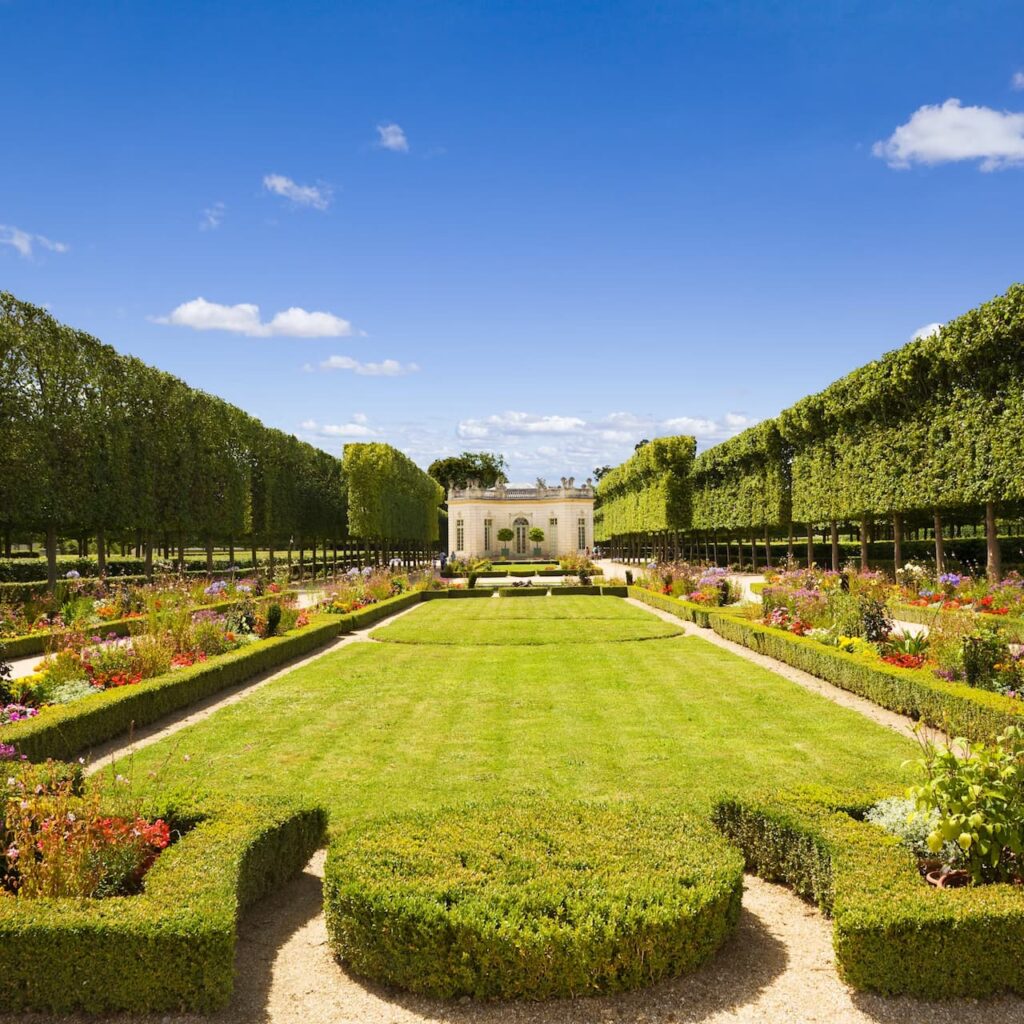
Palace of Versailles: Entrance Ticket + Gardens and Trianon Estate
Purchase online. Choose your preferred time. Visit the Palace of Versailles and the halls of the Palace, access the Gardens and Trianon Estate
You can cancel for free up to the day before your visit.
How to visit the ponds the Fountains of Versailles
To admire the wonders of Versailles’ ponds and fountains in person, I suggest you follow some practical tips to plan an unforgettable visit:
Tickets and schedules
First, be sure to purchase tickets to access the Gardens of Versailles. Check the opening and closing times of the gardens on this site, as they may vary depending on the season and ongoing special events. Consider that on days without special events, admission to the gardens is normally free. Below I provide our selection of tickets, as well as updated schedules:
Remember that the Gardens are open during the following hours:
- In High Season (April 1 to October 31): Daily from 8 a.m. to 8:30 p.m
- In Low Season (November 1 to March 31): Daily from 8 a.m. to 6 p.m
Guided tours
If you want a more in-depth and informative tour, consider participating in guided tours of the gardens. Many tour agencies offer specialized tours led by experienced guides who provide detailed information about the artwork, history, and architecture of the gardens. Below I provide our selection of guided tours:
Special Events
Check to see if any special events or nighttime fountain shows are scheduled during your stay at Versailles. These occasions offer a unique and spectacular experience with lights and sounds that further enhance the beauty of the gardens.
Find out more by reading my article “Fountains and Musical Gardens of Versailles” and “Versailles Night Fountains Show.”
By following these practical tips, you can plan an unforgettable visit to admire the beautiful artwork of Versailles’ ponds and fountains live.
Frequently asked questions
The evening Fountains show happens every Saturday from the beginning of June to the end of September, on July 14 and August 15, from 8:30 p.m. to 11:05 p.m. Did you know that there are also afternoon shows like the Musical Fountains show? Read my article on the subject within the site to learn more.
Altogether, there are about 50 fountains in the Palace of Versailles.
It is said that during the reign of Louis XIV, more than 7,000 gardeners worked to maintain the magnificent Palace Garden. Today, the care of the garden is entrusted to a team of a few hundred gardeners.
There are many things to see in Versailles. Some of these are the Palace with its sumptuous interiors, the magnificent gardens with their fountains and statues, and the Trianon, a charming royal residence located within the Gardens.
Conclusions
Here ends our journey through the ponds and fountains of Versailles, one of the most extraordinary testimonies to the art and architecture of the French Baroque period. In this article, we have examined different aspects of these scenic wonders in detail.
We explored the Four Basins of the Seasons, delved into the Animal Fights, then discovered the mythological Dragon Basin and the striking Neptune Basin, learning about the history and transformations of these iconic fountains over the centuries.
We lingered on the Basin of Latona, the majestic Basin of Apollo, and, finally, explored other basins and fountains, such as the Mirror Basin, the Bath of the Nymphs, and the Basin of the Golden Children, discovering the artistry and ingenuity that characterize each of these works of art.
I wanted to conclude by answering frequently asked questions, hoping to satisfy some lesser-known curiosities.
If you have any questions or would like additional information about the ponds and fountains of Versailles, please leave a comment below.
But if you are ready to explore these extraordinary works of art in person and immerse yourself in the magnificence of the gardens of Versailles, why not plan a visit today? Book your ticket securely directly from our website and get ready for an unforgettable experience at Versailles!

Palace of Versailles: Entrance Ticket + Gardens and Trianon Estate
Buy online. Choose your preferred time. Visit the Palace of Versailles and the halls of the Palace, access the Gardens and Trianon Estate
You can cancel for free up to the day before your visit.


