
The Palace of Versailles, a symbol of the power and grandeur of the absolute French monarchy, is one of the most iconic and visited monuments in the world. Every year, millions of tourists pass through its gates to immerse themselves in its magnificence.
But in addition to its splendid halls and gardens, the estate is a place full of fascinating stories, curiosities and legends. If you want to know more about the curiosities, secrets and legends that characterize this place, read on and get ready to experience a thrill of discovery!
A MOMENT! Know that exploring the Palace of Versailles is an unforgettable experience, but the long lines can be very daunting. To make your visit more enjoyable and stress-free, purchase your tickets in advance. Click here to purchase your tickets and immediately immerse yourself in the history and magnificence of Versailles without waiting!

Palace of Versailles: Entrance Ticket + Gardens and Trianon Estate
Buy online. Choose your preferred time. Visit the Palace of Versailles and the halls of the Palace, access the beautiful gardens and the stunning Trianon Estate.
You can cancel for free up to the day before your visit.
Table of Contents
Interesting facts about the Palace of Versailles
The transformation from hunting pavilion to royal palace
The transformation of the simple hunting pavilion initially commissioned by Louis XIII in 1623 into the magnificent palace we know today was a titanic undertaking and an unprecedented work of architectural art.
When Louis XIV came to the throne in 1643 at the age of only four, the chateau was still a modest hunting lodge situated on a vast wooded area a few miles from Paris. It was not until the beginning of his personal reign in 1661, after the death of Cardinal Mazarin, that Louis XIV decided to transform Versailles into a residence worthy of Europe’s most powerful king.
The project to transform Versailles into a royal palace of monumental proportions was entrusted to architect Louis Le Vau, who was tasked with expanding the existing chateau and creating a structure that could house the court and royal servants. Le Vau designed the north and south wings of the palace, beginning the construction of what would become the heart of the Versailles complex. His work was then continued by Jules Hardouin-Mansart, who added the sumptuous Gallery of Mirrors and completed the facade on the courtyard of honor.
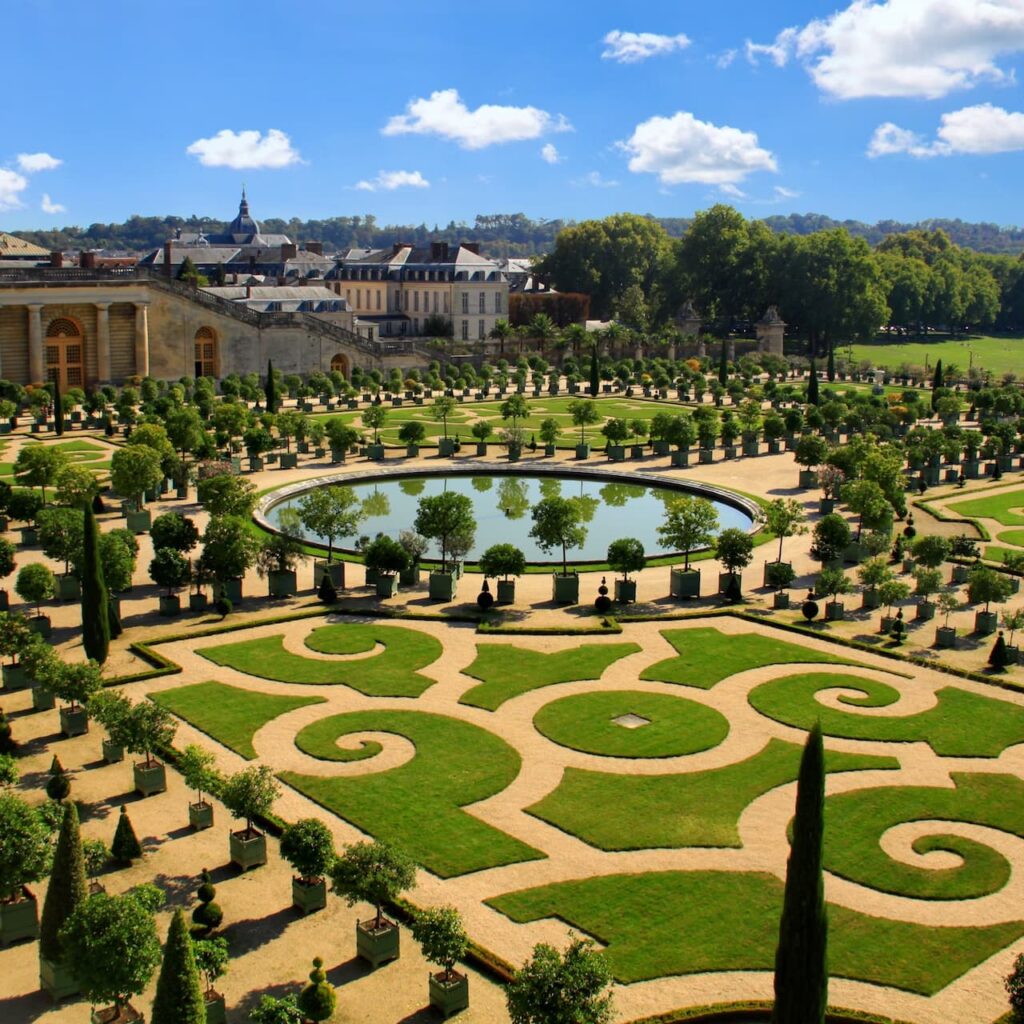
Parallel to the construction of the palace, the transformation of the surrounding gardens was also begun. André Le Nôtre, the celebrated landscape architect, was commissioned to design the Italianate gardens, with fountains, statues and geometric flowerbeds, creating an impressive scenic backdrop for the expanding palace. Work continued for decades, involving thousands of workers, craftsmen and artists,gradually transforming Versailles from a simple hunting lodge into one of the largest and most majestic royal palaces in Europe.
This transformation not only radically altered the appearance of Versailles, but also had a lasting impact on European history and culture. The palace and its gardens became not only a symbol of the absolute power of the French monarchy, but also the center of the country’s political, social, and artistic life.
Versailles has hosted important historical events, diplomatic treaties, and lavish ceremonies that have influenced the course of European history, making it a unique and unrepeatable place in the landscape of world monuments.
The Gallery of Mirrors
The Gallery of Mirrors is one of the most famous and iconic rooms in the Palace of Versailles, known for its extraordinary beauty and historical significance.
Seventy-three meters long and decorated with 357 mirrors, the gallery was designed by Jules Hardouin-Mansart and built between 1678 and 1684. Its construction was commissioned by Louis XIV with the intention of creating an extraordinary setting to welcome important guests and to celebrate the power and grandeur of the French monarchy.

In addition to its magnificent decoration, the Mirror Gallery has played a crucial role in European history. It is here that important treaties and diplomatic agreements were signed, including the signing of the Treaty of Versailles in 1919, which ended World War I. This room also hosted lavish parties, receptions and court ceremonies, becoming the beating heart of Versailles’ social and political life.
The natural light that filters through the windows and is reflected by the mirrors gives the room a magical and bright atmosphere, making the Gallery of Mirrorsone of the most fascinating and memorable places in the palace.
Hygiene at Versailles in the time of the Sun King

Hygiene at Versailles during the reign of Louis XIV was very different from modern standards.
Despite the opulence and luxury of the palace, hygienic conditions left much to be desired. The palace was not equipped with adequate bathrooms or toilets, and courtiers often used chamber pots that were emptied directly out the windows or into the gardens.
The palace halls were perfumed with copious amounts of fragrance to mask bad smells. In addition, running water was a rarity, and most people rarely washed, preferring to use heavy perfumes to cover body odor. Louis XIV himself was known to bathe only a few times a year.
This lack of hygiene contributed to frequent epidemics and health problems among the nobility residing at Versailles. Despite this, the court maintained an impeccable appearance through elaborate hairstyles, sumptuous clothes, and sophisticated accessories that effectively masked the reality of the hygienic conditions of the time.
Palace of Versailles: Entrance Ticket + Gardens and Trianon Estate
Purchase online. Choose your preferred time. Visit the Palace of Versailles and the halls of the Palace, access the beautiful gardens and the stunning Trianon Estate.
You can cancel for free up to the day before your visit.
Secrets of the Palace of Versailles
Secret passages
The secret passages of the Palace of Versailles represent one of the most intriguing and mysterious aspects of the palace.
These hidden corridors allowed the royal family and courtiers to move discretionally between rooms without being seen.
Built for security reasons and to facilitate confidential meetings, secret passages were central to daily life at Versailles, a labyrinth of hidden doors and narrow passageways that connected the private apartments and public rooms of the palace.
One of the best-known passages directly connected the king’s chamber with the queen’s, allowing Louis XIV to visit Maria Theresa of Habsburg, his consort, in complete privacy.
These passages were used not only for intimate meetings, but also to allow the king and his advisers to move quickly during political emergencies or delicate situations.
Queen Marie Antoinette’s private rooms were also equipped with hidden entrances, which the queen used to escape the curious gazes of the court and retreat to her private apartments at the Petit Trianon.
These passages were extremely well hidden and only a few trusted members of the court knew their existence and exact location. Some of these secret routes remain unknown to this day, fueling speculation and legends about hidden treasures or secret documents that might be concealed behind the walls of Versailles. Their existence underscores the complexity and secrecy of court life, where discretion and security were essential.
The stories of the secret passages help make Versailles not only a symbol of power and opulence, but also a place of intrigue and mystery, a palace that still hides many of its most fascinating stories behind its splendid facades.
Exploring these secrets offers an intimate and private glimpse into the life of the French monarchy, revealing the extraordinary measures taken to maintain order and privacy in one of the most glorious courts in history.
The Queen’s Village

ID 36033741 @ Philippehalle | Dreamstime.com
One of the most fascinating secrets of the Palace of Versailles is the Queen’s Village, or Hameau de la Reine, a picturesque retreat built for Marie Antoinette between 1783 and 1786.
Located in the grounds of the Petit Trianon, the village was designed by architect Richard Mique with the intention of recreating a rural idyll where the queen and her ladies-in-waiting could escape the rigid formalities of court and immerse themselves in a simple, bucolic life.
Consisting of a dozen buildings in rustic Norman style, the village included a dairy, a mill, a house for the queen, a granary, and a pond with a picturesque bridge.
This village was not just an aesthetic whim, but a real functioning agricultural microcosm. Marie Antoinette loved to walk the village paths, wearing simple clothes and participating in agricultural activities, such as milking cows or collecting eggs. These activities, however, were often prepared in advance by servants to ensure that everything was perfect and that the queen did not get too dirty or tired.
The village was also a place of education for Marie Antoinette’s children, where they could learn the values of rural life in a controlled and safe environment.
The Hameau de la Reine embodied a stark contrast to the lavishness of Versailles and represented Marie Antoinette’s desire to find a kind of authenticity and tranquility away from the pressures of court life.
However, this bucolic retreat provoked much criticism among contemporaries and helped reinforce the image of a queen disconnected from the reality and hardships of the French people. During the French Revolution, the village was looted and abandoned, but later restored in the 19th century.
Today, visiting the Hameau de la Reine offers a fascinating glimpse into Marie Antoinette’s private life and her attempts to create a corner of serenity and normality within the tumult of the Versailles court.
The village continues to enchant visitors with its rustic beauty and historical significance, making the story of France’s most famous queen even richer and more complex.
The secret apartment of Marie Antoinette
One of the most fascinating secrets of the Palace of Versailles is Marie Antoinette’s private apartment, hidden from the view of most visitors.
Located behind the walls of the queen’s grand suite, this secret apartment was a personal retreat where Marie Antoinette could escape the rigid court etiquette and enjoy moments of tranquility.
Accessible through a series of hidden doors and secret passages, the apartment included several tastefully furnished rooms, including a library, a boudoir, and a small music room.
Here, the queen could indulge in her passions, such as reading and music, away from the prying eyes of the court.
This private space reflected Marie Antoinette’s more intimate and personal side, far from the public image of a lavish and frivolous queen.
The existence of this secret apartment underscores the need for privacy and normality that even the most illustrious and powerful figures can have, and adds another layer of charm to the already rich history of Versailles.
Palace of Versailles: Entrance Ticket + Gardens and Trianon Estate
Purchase online. Choose your preferred time. Visit the Palace of Versailles and the halls of the Palace, access the beautiful gardens and the stunning Trianon Estate.
You can cancel for free up to the day before your visit.
Legends of Versailles
The Ghost of Marie Antoinette

One of the most fascinating and persistentlegends related to the Palace of Versailles is that of the ghost of Marie Antoinette.
It is said that the spirit of the tragically beheaded queen continues to roam the gardens and corridors of the palace, particularly around the Petit Trianon, her favorite refuge away from the rigid etiquette of court.
This idyllic place, which also includes the Hameau de la Reine, the rustic village built to escape the pressures of royal life, seems to be the main theater of the queen’s apparitions.
The most famous account of an encounter with the ghost of Marie Antoinette dates back to 1901, when two English teachers, Charlotte Anne Moberly and Eleanor Jourdain, claimed to have had an extraordinary experience during a visit to the Petit Trianon.
The two women recounted seeing figures in 18th-century clothing and encountering a sad woman whom they believed to be Marie Antoinette herself, sitting and drawing.
Their experience was so detailed that they described it in a book, “An Adventure,” which aroused great interest and debate.
In addition to this famous sighting, there have been many other accounts from visitors and palace employees who claim to have seen a female figure dressed in clothing from the queen’s era or to have felt an eerie presence.
Some have reported hearing laughter or crying coming from rooms that once belonged to Marie Antoinette, especially on silent nights or during the early morning hours.
These accounts, though unverifiable, add another dimension to the already rich history of Versailles. Whether autosuggestion or genuine apparitions, the legend of Marie Antoinette’s ghost continues to fascinate and frighten, bringing to life the drama and tragedy of her life in the magnificent yet eerie context of the palace.
The mysteries of the groves

ID 188850224 @ Michael Mulkens | Dreamstime.com
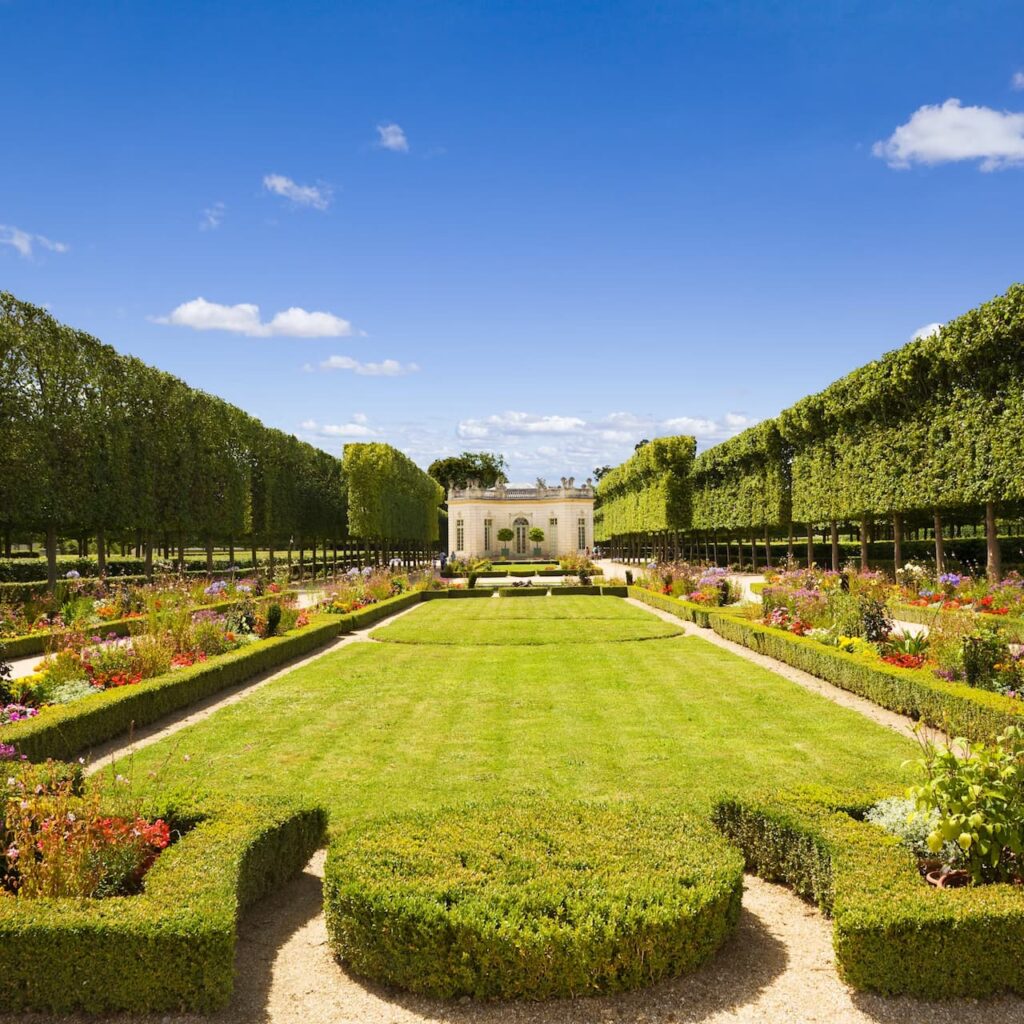
The groves of Versailles, with their intricate pathways, hidden statues and secret corners, have always been shrouded in an aura of mystery and fascination. Designed by André Le Nôtre, these hidden gardens were intended not only for the contemplation of nature but also for more secret and intimate functions.
During the reign of Louis XIV, the groves were often used for clandestine meetings, private parties and political intrigue. It is said that secret meetings of lovers, conspirators and influential court figures took place among these trees and hedges, far from the prying eyes of the public and royal surveillance.
Some groves, such as the Bosquet des Rocailles (Grove of the Rocky Mountains) or the Bosquet de l’Encelade (Grove of Enceladus), were known to have fountains and grottos with complicated mechanisms that could be activated to surprise and delight guests, but also to create enigmatic atmospheres.
The complexity and secrecy of these places have fueled numerous legends about supernatural events. There are tales of ghostly apparitions and mysterious sounds echoing among the plants, especially at night. Some visitors and gardeners have reported hearing laughter and whispering, attributing them to the spirits of courtiers of the past or enigmatic figures from Versailles history.
In addition, some groves were said to have underground passages connecting different parts of the palace and gardens, used for quick escape or to move around unseen. These passages further fuel the stories of hidden secrets and dark plots that shroud Versailles.
Although many of these legends cannot be confirmed, the charms of the groves of Versailles continue to intrigue and stimulate the imagination of visitors, making them an essential part of the palace’s incredible legacy of stories and mysteries.
The secret of the labyrinth
In the 18th century, the gardens of Versailles housed a famous labyrinth, designed by André Le Nôtre at the request of Louis XIV. This intricate labyrinth was not only a recreational attraction; it was also meant to be a symbol of the king’s power and wisdom.
Decorated with 39 fountains representing Aesop’s fables, the labyrinth served as an educational path for the Dauphin, Louis XIV’s son. The fables, each with a moral, were illustrated by statues of animals splashing water, creating a magical as well as educational environment.
However, the labyrinth was dismantled in 1778 to make way for a more modern landscape garden, but its disappearance has fueled many theories and speculations.
Some historians suggest that the labyrinth hid esoteric messages and Masonic symbols. Others believe there were hidden treasures or that the labyrinth was used for secret meetings and conspiracies.
Its removal has left an aura of mystery, making the labyrinth a legend shrouded in enigma and curiosity. The lack of detailed documentation on the reasons for its demolition continues to fuel speculation, making the labyrinth one of Versailles’ most intriguing secrets.
Curiosities, secrets and legends about Versailles: FAQ
Versailles is famous for being one of the most opulent royal residences in the world, a symbol of the power and grandeur of the absolute French monarchy. Its magnificent architecture, sumptuous interiors, vast gardens and rich halls bear witness to European history and culture.
Important treaties and diplomatic agreements were also signed here, including the Treaty of Versailles, which ended World War I in 1919.
At Versailles, personal hygiene was very different from modern standards. The palace did not have baths or toilets as we know them today. Courtiers and members of the royal family rarely washed, masking body odors with intense perfumes.
Running water was a rarity, and bathing was considered a luxury: the king himself washed only a few times a year.
At Versailles, toilet facilities were limited and rudimentary. Courtiers and members of the royal family mainly used chamber pots or “chamber pots” that were emptied in the court toilets or directly outside the palace windows.
It should be mentioned that this system was common throughout Europe before the advent of modern toilets.
The Palace of Versailles is rich in significant artistic elements; the palace itself is a masterpiece of Baroque architecture, with its imposing facades, colonnades, and lavish decorations.
Inside the palace are works of art by renowned painters of the period, including paintings by artists such as Charles Le Brun and Hyacinthe Rigaud.
Numerous sculptures adorn the gardens and halls of the palace, with works by artists such as Gian Lorenzo Bernini and François Girardon.
The interiors of the palace are richly decorated with fine furniture, tapestries and tapestries, creating an ambience of great luxury and splendor.
The gardens of Versailles, designed by André Le Nôtre, are a masterpiece of landscape architecture, enriched with fountains, statues and groves that give them a magical and evocative atmosphere.
These are just some of the artistic elements that help make the Palace of Versailles one of the most extraordinary royal residences in the world.
Conclusions
Here we are, finally, at the conclusion of this journey through the history, secrets and wonders of the Palace of Versailles. In this article we have seen how the Sun King transformed a simple hunting pavilion into a majestic royal palace, rich in history and opulence.
We explored curiosities related to daily life at court, from hygiene practices to the use of secret apartments, casting an intimate glimpse into the lives of monarchs and courtiers.
We uncovered the hidden secrets of Versailles, from secret passages to ghostly legends that still fuel visitors’ curiosity and imagination.
Finally, in the frequently asked questions section, we looked at the artistic importance of the palace, from works of art to sculptures, which make it a true cultural and artistic treasure.
If you still have questions or curiosity about the Palace of Versailles, feel free to leave a comment below. If, on the other hand, you are ready to go and experience the magnificence of Versailles firsthand without having to wait in line, don’t miss the opportunity to purchase your tickets online. Plan your visit today and get ready to immerse yourself in the history and opulence of Versailles without stress or waiting.

Palace of Versailles: Entrance Ticket + Gardens and Trianon Estate
Purchase online. Choose your preferred time. Visit the Palace of Versailles and the halls of the Palace, access the beautiful gardens and the stunning Trianon Estate.
You can cancel for free up to the day before your visit.


